


A beautifully designed dining room is more than a place to gather around a table. It is a carefully considered composition of architecture, proportion, materials, lighting, and furnishings.
The most enduring luxury dining rooms balance elegance with everyday comfort. Whether designing a formal dining room or an intimate dining space, the selection of a dining table, complementary chairs, and carefully layered decorative elements can transform the character of the interior.
This guide explores the principles of timeless luxury dining room design, from choosing the right furniture proportions to combining natural materials, upholstery, lighting, and art into a cohesive space.

Begin with architectural proportion
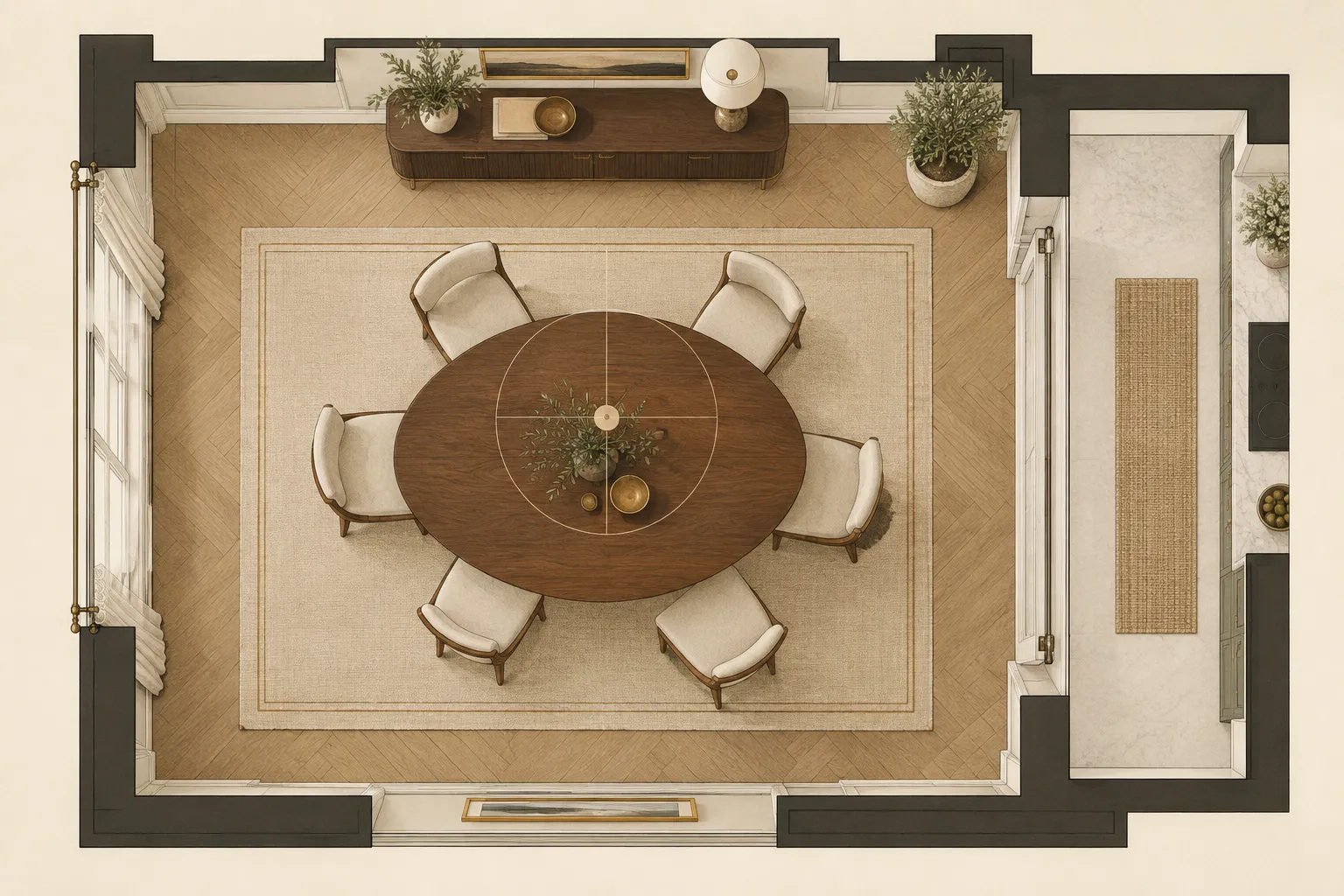
Start with a scaled drawing that includes door swings, windows, the sideboard and the passage to the kitchen. Count the people who dine there most weeks, then the guests you host on occasion. An extending table accommodates both without occupying the larger footprint every day.
Start with about 24 inches of tabletop edge per diner and 30 to 36 inches behind a chair for someone to rise and pass. Lay out the furniture before you order: wide upholstery, corner legs or a buffet behind the seats can reduce the room you have to move.
Mark the proposed tabletop on the floor and pull a chair out. Walk from the kitchen to the seats; then look back from the living area. In an open-plan home, you may see the backs of the dining chairs more often than the tabletop.
Measure the delivery route too, especially for a one-piece top or an upstairs dining room. Record door openings and tight turns before settling on a size.
Choose a luxury dining table with lasting presence
In a square room, a round table lets guests talk across it with ease; a rectangle sits well in a long room. Where people pass close to the corners, an oval offers a softer outline. A pedestal leaves more options for placing chairs than legs at each corner.
|
Table choice |
What it offers |
What to weigh |
|---|---|---|
|
Solid or veneered wood |
Grain, warmth and the possibility of a finish with depth |
Ask how the top is constructed and how its finish should be maintained |
|
Natural stone |
Distinctive veining and a substantial focal point |
Consider weight, porosity and the care requirements of the chosen stone |
|
Glass |
Visual lightness and an uninterrupted view of a sculptural base |
Fingerprints and reflections are more apparent |
|
Extendable design |
A smaller everyday footprint with occasional extra places |
Inspect the leaf storage, alignment and appearance when open and closed |
A thoughtfully selected veneer can carry grain across a large top in one continuous pattern; solid wood feels different beneath the hand. Examine the edges and underside, where the finish meets the base. For a stone top, request an image of the slab for approval if the variation matters to you. Open and close an extending table yourself to feel the mechanism.
A dining table should make sense against the architecture around it. A substantial stone top can ground a tall room; a slender timber silhouette leaves more visual space in an intimate one. Sit down to judge the view across the table. The Rothwell dining table is one silhouette to consider.
Select luxury dining chairs for comfort and character
You could place enveloping upholstered chairs around a restrained wooden table, or use lighter timber frames beside a sculptural stone top. Carry one element between them, perhaps the curve of an edge or the warmth of the wood. The pairing will have some kinship without looking like a suite.
Try the chair at the table. Compare the Madrid woven rattan dining chair with upholstered options to judge how much texture and softness you want. Slide the chair beneath the apron, check the space for your knees and stay seated for a while. A chair that cannot pull in close will frustrate you at every meal.
Consider upholstery, joinery and the feel of the seat
Upholstery softens stone, timber and glass. Fabric and leather each have a different feel, while exposed timber keeps a chair's outline light. For everyday meals, favor upholstery that suits spills and frequent cleaning. Occasional gatherings leave more room for a delicate textile and the care it requires.
Ask how the frame is joined, whether an upholsterer can renew the covering and how to care for the fabric. Run a hand along the seams and exposed edges; these details deserve as much attention as the silhouette. Put armchairs at the ends only if they fit beneath the table and leave room for side chairs.
For a client project, approve the chair and table together. A swatch shows color and texture, but the finished chair is where you learn about its back angle, seat depth and fit beneath the apron.
|
Pairing |
Effect in the room |
Best considered when |
|---|---|---|
|
Dark wood table and light upholstered chairs |
Warmth balanced by softness |
The room needs visual relief from deep finishes |
|
Pale stone table and timber-frame chairs |
Cool surface with an organic counterpoint |
You want texture without competing patterns |
|
Sculptural pedestal and slim armless chairs |
A strong centerpiece with an open perimeter |
Circulation is tight or the table base is expressive |
Layer light, texture and art into the room
At supper, the light over the table matters as much as the fixture's appearance by day. Center it on the tabletop, taking the extended length into account if the table opens. With a dimmer above and a lamp on the sideboard, you can soften the room without losing the light you need to serve.
Give the rug enough width that chair legs stay on it when you pull the chairs back. Look at the Grosvenor rug against your room's dimensions, including the space needed behind each seat. Keep serving pieces in a sideboard so the tabletop stays clear between courses. Art can pick up a color from elsewhere in the home; Blackwood dinnerware and a low centerpiece add interest without blocking conversation.
Create continuity with the adjoining rooms
In an open-plan interior, let the furnishings share a few details without matching. Echo the tone of a metal detail in an adjoining room, or carry a color between spaces through a rug without repeating the same textile. The eye should sense a relationship rather than a coordinated set.
Oak beside stone and textured upholstery beside polished metal bring contrast without discord. If you are composing both dining and living spaces, settle the proportions of the larger pieces first. Lamps, art and smaller objects can follow.
Plan finishes, bespoke details and investment
The investment in luxury dining furniture depends on scale, materials, construction, finish and personalization. A selected stone top with a custom base calls for a different budget from a stocked table in a standard finish. Include chairs, upholstery, lighting, rug, delivery and installation when you consider the whole room.
Request an itemized proposal for the table and chairs. You will need enough detail to compare the materials and services included:
-
Table: overall and extended dimensions, top material, base finish, leaf mechanism and finish care.
-
Chairs: quantity, frame finish, upholstery specification, arm height and whether fabric is supplied by you or the maker.
-
Service: delivery access, assembly, packaging removal, lead time, and any installation or white-glove options.
For a bespoke commission without a published price, request a written proposal tied to approved dimensions and finishes. Read what each total covers: one quote may include chairs and installation while another covers only the table.
Ask how the maker handles differences between a sample and the finished material. Wood grain and natural stone vary, so agree on what you will approve before fabrication begins.
Bring the room together with considered guidance
Study finishes and dimensions together, ideally with samples and an opportunity to sit in the chairs. An online collection can help you narrow silhouettes, but photographs cannot tell you how an upholstered back feels or how a finish responds to the light in your room.
House of Ellory brings together original furniture, rugs, art, lighting, tableware and decor for considered interiors. Select designs can be personalized in woods, stone, upholstery and metal finishes. Private interior design and bespoke commissions can help with difficult proportions or an entire room; white-glove delivery is available for select furnishings.
Bring room dimensions, photographs, your usual seating count and the pieces you plan to keep. You can then talk about the exact finishes and chair scale the room needs.
Creating a Dining Room That Endures
The most memorable dining rooms are not necessarily the most elaborate. Their beauty comes from proportion, material harmony, comfortable furnishings, and the thoughtful relationship between architecture and everyday living.
A well-chosen dining table provides the foundation, while carefully considered chairs, lighting, textiles, and art establish the room's character. Natural materials bring warmth and individuality, allowing an interior to develop depth over time.
At House of Ellory, this philosophy informs an approach to interiors rooted in timeless European elegance, distinctive design, and the enduring beauty of considered materials.
Ultimately, a beautiful dining room should feel as welcoming during an ordinary family dinner as it does during a special celebration.
FAQ
How do you make a dining room feel elegant without making it formal?
Begin with generous circulation, comfortable chairs and lighting you can soften after dinner. Let the grain of wood, the variation of stone and a few carefully chosen objects bring depth without filling every surface.
Should a luxury dining table and chairs match?
Not necessarily. A shared curve, complementary wood tones or a balanced contrast in materials can make different pieces feel at ease together. Check seat height, arm clearance and the space behind each chair before committing to the pairing.
Which materials work well in a timeless dining room?
Wood, natural stone and considered upholstery each bring a distinct texture. Choose for your household as well as the room's architecture: ask about finish care and stone porosity, and select chair coverings suited to how often the room is used.


